email Youtube

Home
Galleries
Blog
Workshops & Calendar
Store
Resources
About
Contact

Author Archive

16 years! Home, Maine, HOME!

Saturday, July 11th, 2020

When I arrived in Maine 16 years ago today, to move into our house in Camden (we moved from there to neighboring hope in 2011), I did not know that after 46 years of wandering the globe and living on four continents, I had finally found what I always wanted: HOME!
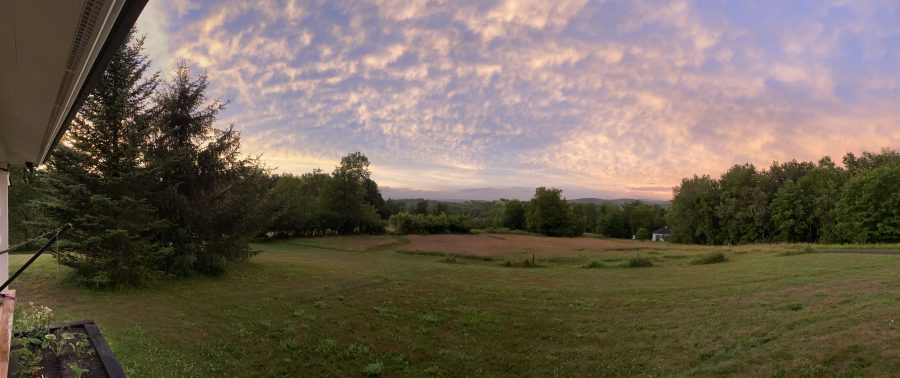
After the storm, just a couple of days ago, from our front porch

Maine has become my muse and my soul’s home. Within two years, I made this quilt which flowed out of me effortlessly. In such a short time, I had become Maine’s and Maine had become my heart’s true home.
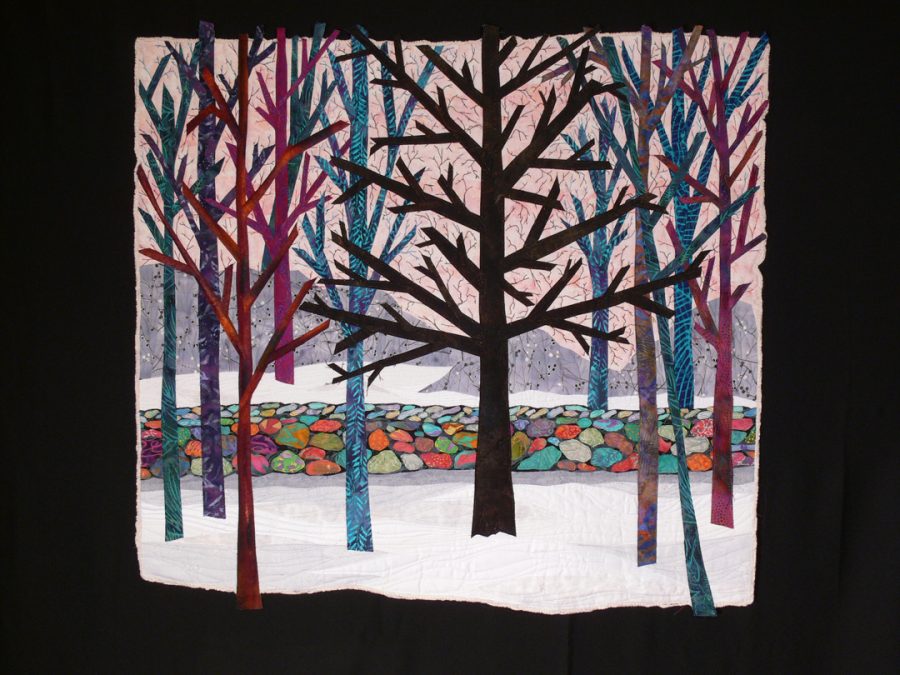
A Sense of Place: The Wall

When I grew up on the West Coast, everyone said that the West Coast was friendly, open, welcoming, made up of newcomers. Yet as a 6 year old arriving from Argentina, it wasn’t. The leader of the Brownie troupe wouldn’t let me join because we hadn’t lived in California long enough. Children told me I wasn’t a Californian and never would be because I wasn’t born there. Quests for better schooling let my mother to move me from school to school: Bayside, Central, Grenada, Del Mar and finally San Domenico all in the time from January of First grade to the start of 7th grade. I didn’t belong and never did. From College until age 46, I moved. And moved. And moved. All work, but still. No place to feel HOME.

Yet when I moved to Maine, where there was supposedly the vaunted “Yankee reserve,” I was welcomed with open arms even though I am indeed “from away.” Long time Mainers and others from away welcomed me equally. Quilters welcomed me and gave me a home. I began my quilt art and teaching career here. And this year, I was honored, humbled and thrilled to learn that one of my quilts will hang at the Bicentennial Exhibit to celebrate Maine’s 200th anniversary of Statehood at the Maine State Museum in August as one of Maine’s contemporary quilts. Everything has, of course, been delayed by COVID, but there will also be a book and I’m in it, with thanks to Laurie LaBar, head of Textiles (and other things) at the Museum. Did you know where I live was part of two states (sort of)? The District Of Maine was part of the Massachusetts Bay Colony when the colonies became the first 13 states in the Union in 1776. In 1820, as part of the Missouri Compromise, Maine became a separate state.
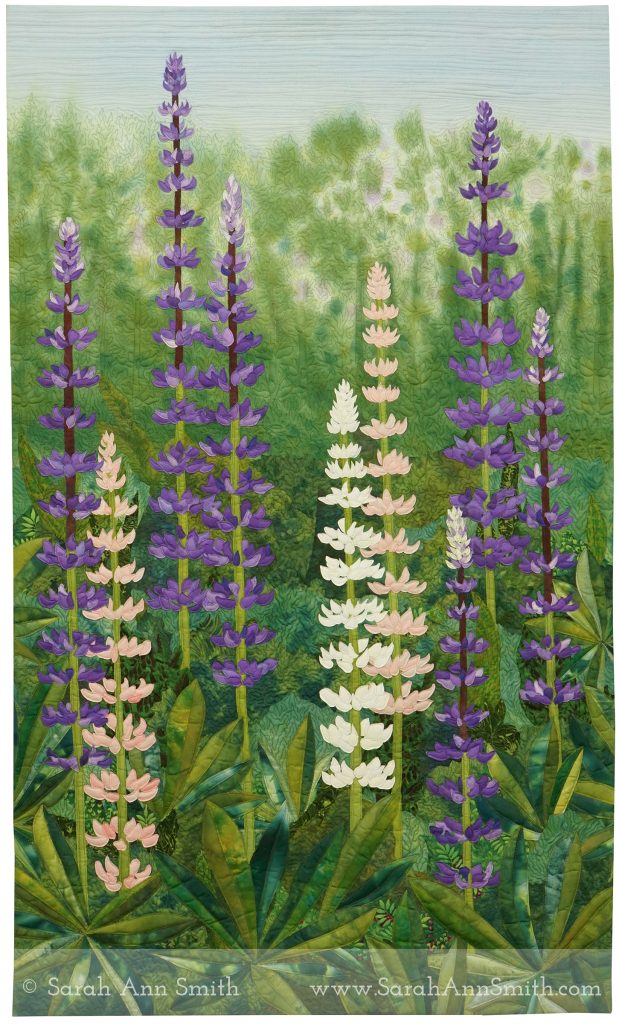
Over the past few years I have been making work inspired by the world around me, including Lupines.
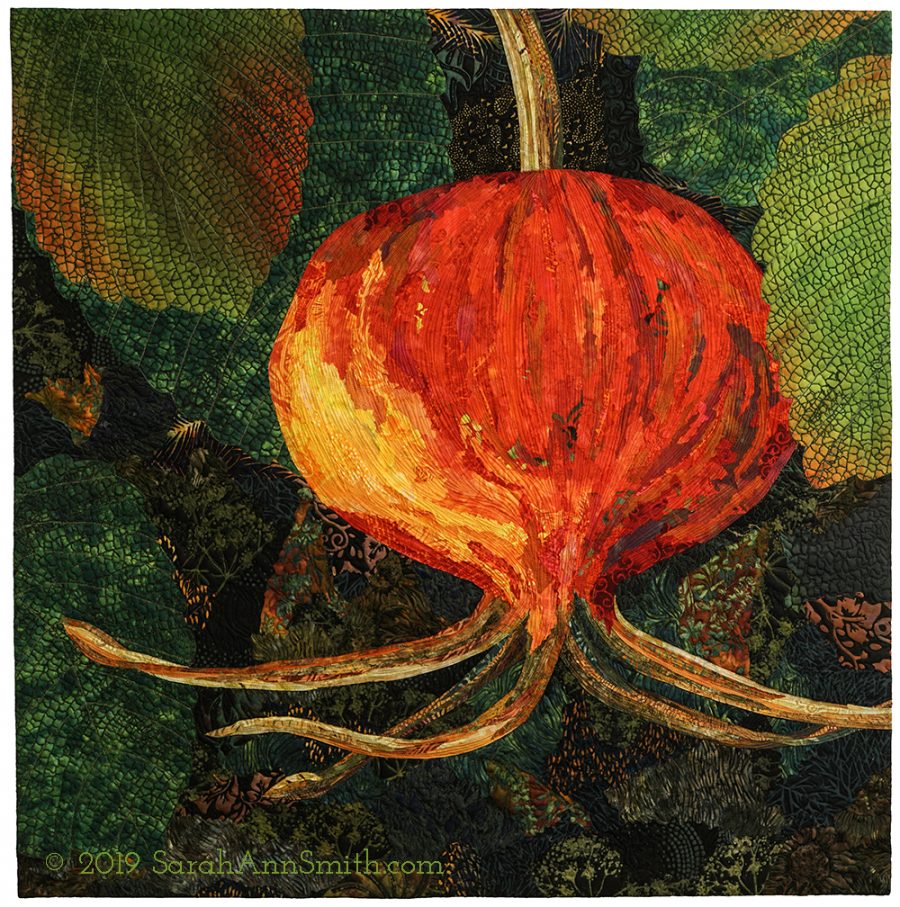
Rose Hip, by Sarah Ann Smith (c) 2019. 36″ square. One of my favorite quilts, in part because it is of my beloved Maine, but also because I’ve been able to meld my personal hand dyes, a hand dye by Lisa Walton, fabrics printed and over-painted by me, to create a cohesive image.
My beloved apple tree, on the lower part of our driveway. This WILL become a quilt! A big one.

My goal is to make an exhibit’s worth of quilts celebrating the world around me. Guess I’d better stop blogging and get back to the studio. I am forever grateful to be here with my husband, two sons Joshua and Eli, my third-child-by-another-mother DIL Ashley, and all the various critters past and present and future that share our lives.

From dog walkies this week. Always the world changes and is the same. It inspires me, it fills me with joy and awe and hope.

Peek Into Batiks–June Block!

Friday, June 26th, 2020

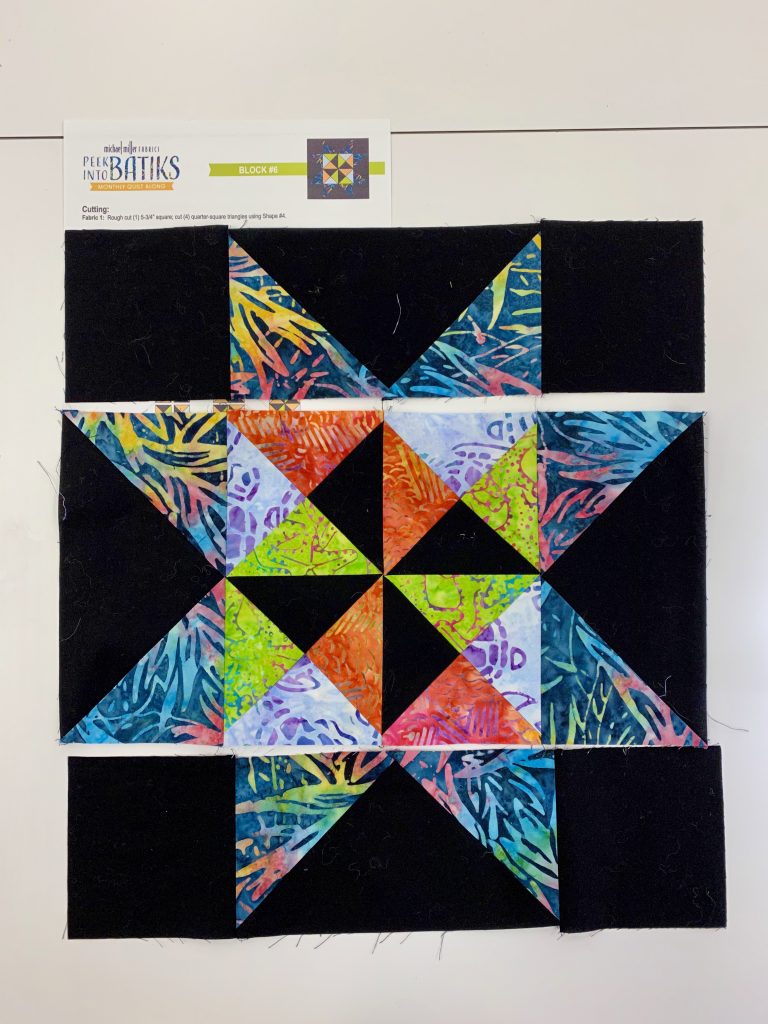
Earlier in the year I shared that Michael Miller Fabrics is doing a Block of the Month called Peek Into Batiks. It all began here. That post has links to each month as the new block goes live. Well, June is my turn! I’ve got still photos and (gasp) a video! And, drum roll here is the link to the JUNE Pattern and instructions.

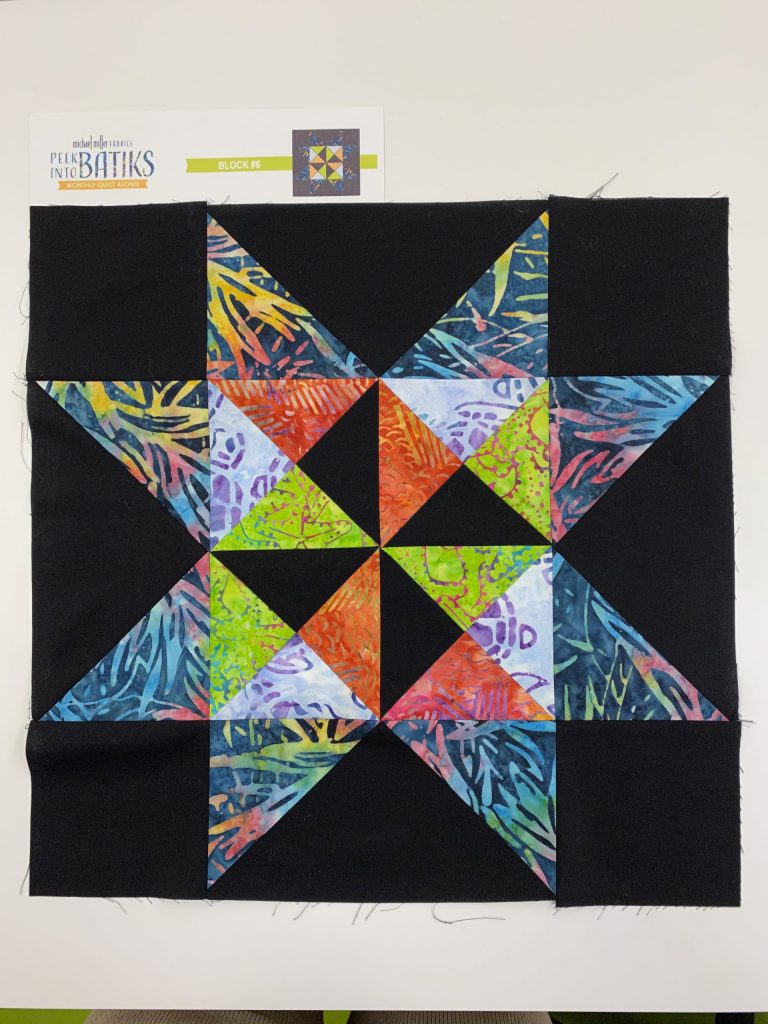
Here’s the finished block! Read on for step by step instructions.

First, of course, you need to cut your fabrics. I used a hybrid method using the AccuQuiltGo! for everything except the large black triangles on the border. First, let me show you how fast it went cutting the components on my AccuQuiltGO! in this video. The video isn’t perfect–I’m improving in my editing skills. I need to mark what is within camera view though! Next video will be even better…I’m learning! When I was playing, it stopped a couple times so just click play again to continue–keep an eye on where the progress bar is. Dunno what’s up with that…another learning curve LOL!

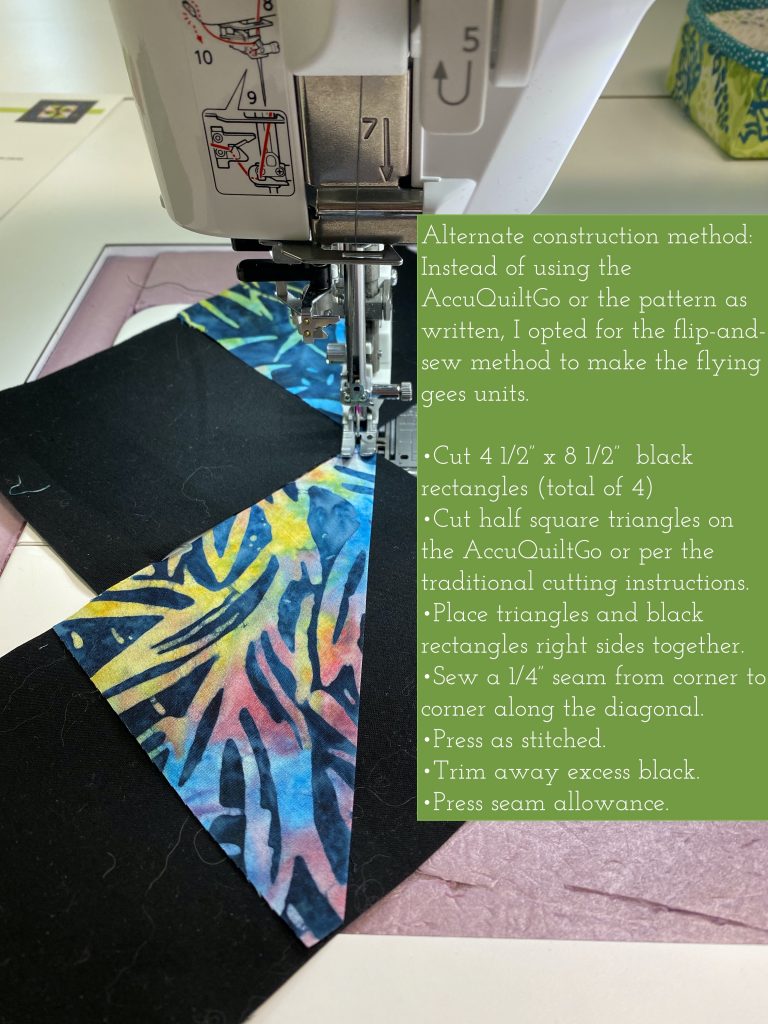
Wasn’t that amazing? Wait until you see the Winding Ways quilt I have in progress for later this year! For now, let’s stick to Peek Into Batiks! This step is where I veer from the instructions (of course, it’s me… who follows instructions EVER completely? Not me…) In the interest of fewer seams, I chose to use the flip-and-sew method for the Flying Geese Units.

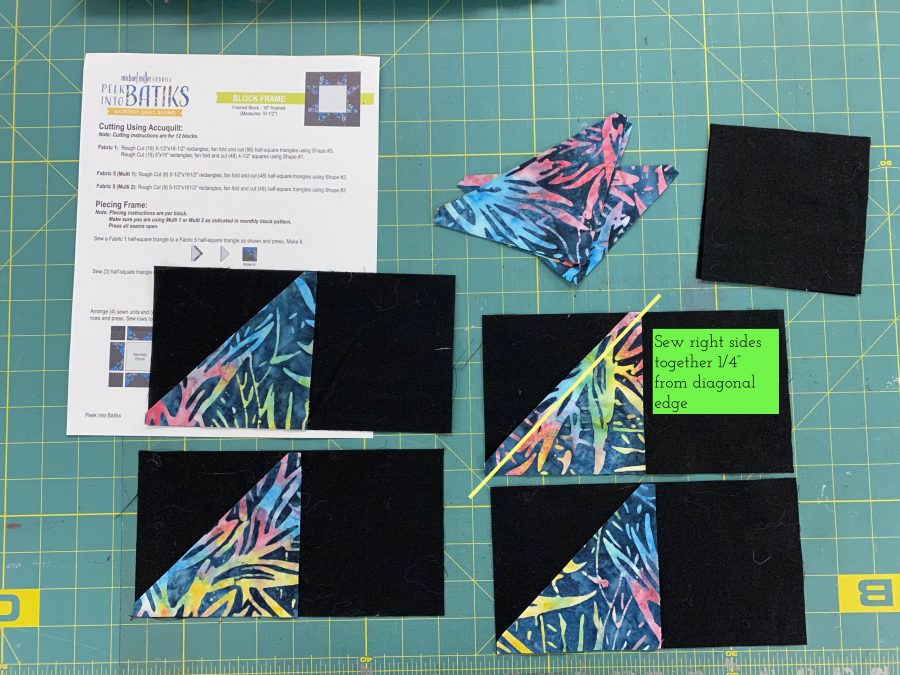
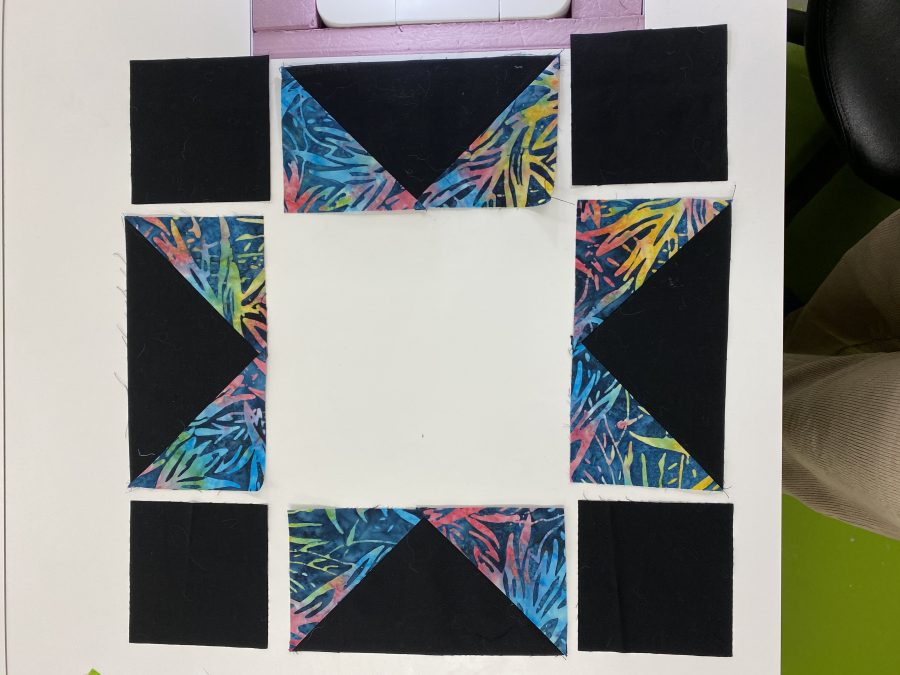
I’ve set out the large rectangles and half square triangles to make the frame for the block.
Then I chain pieced the first side of the large Flying Geese.
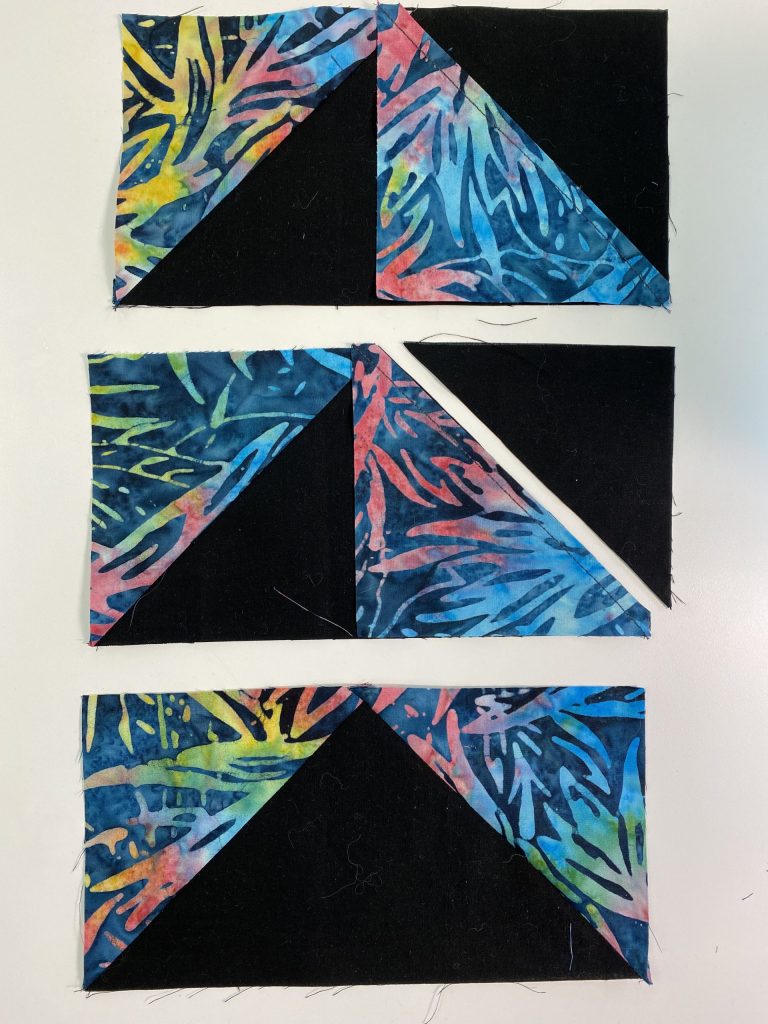
For the second side of the Flying Geese, same process, just make sure you get the triangles doing in the correct direction. Sew, trim, press.
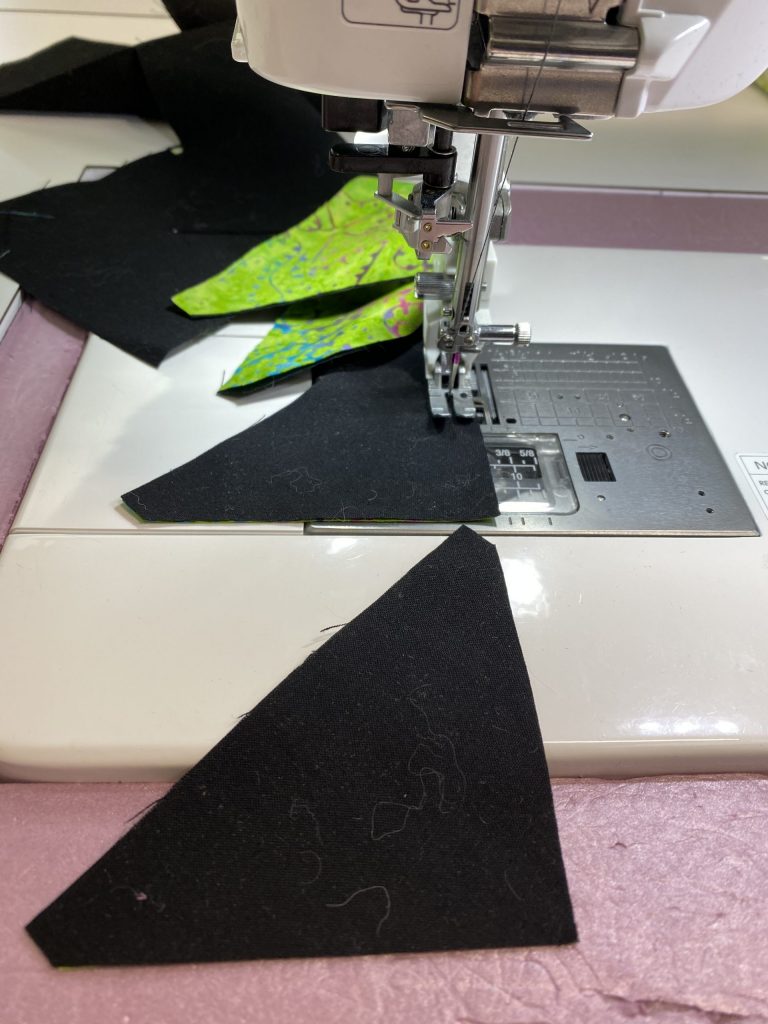
And the actual sewing bit…
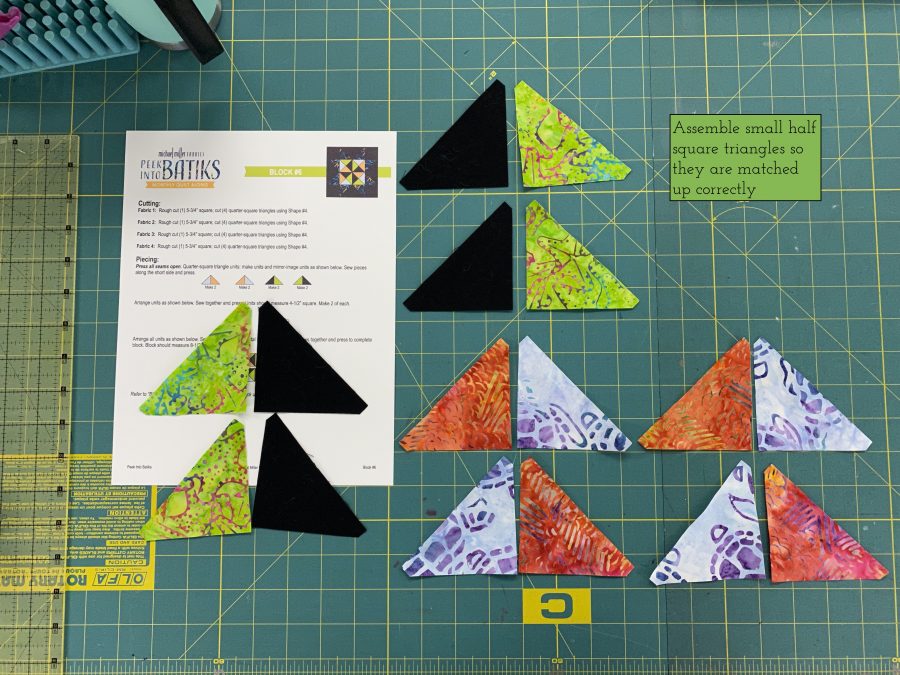
In the interest of not ripping out seams, it really helps to lay these out so you have theirs organized correctly.
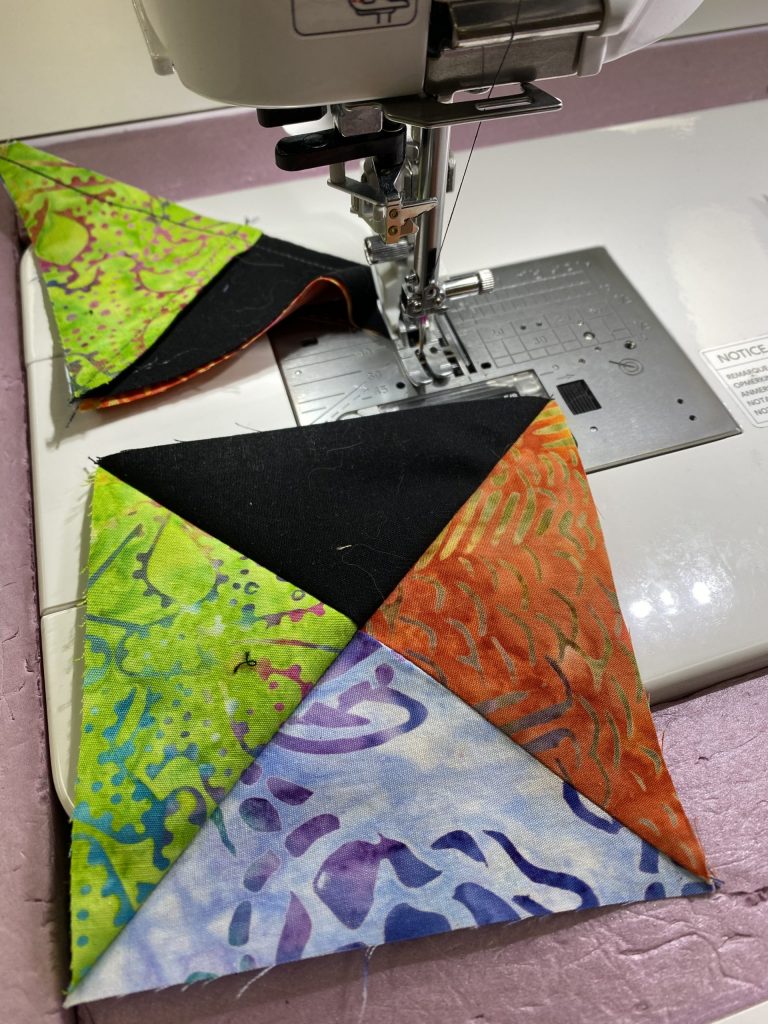
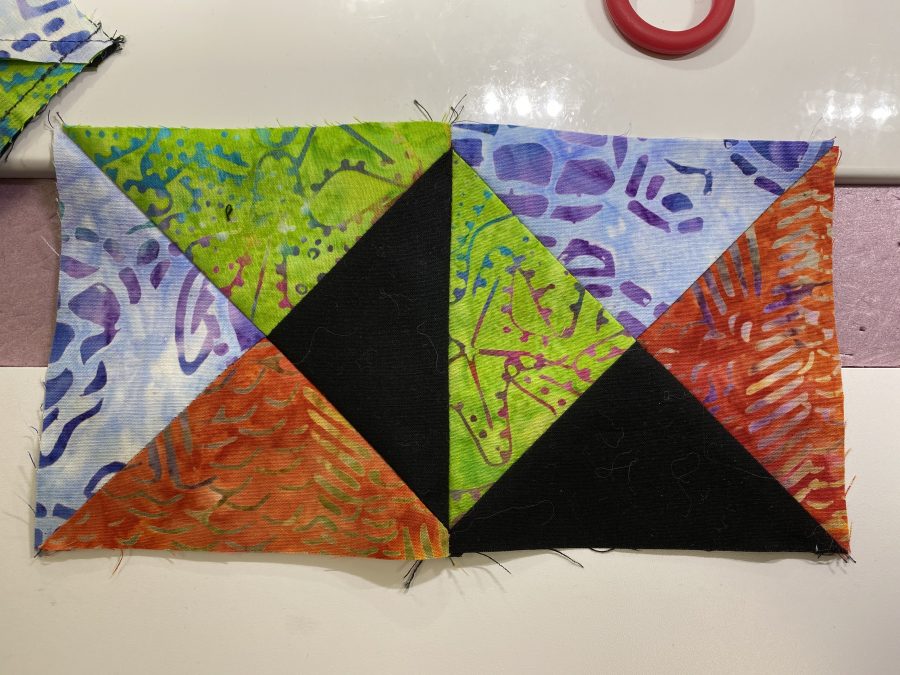
Next up, piecing the quarter-squares for the center. First, sew two triangles together.
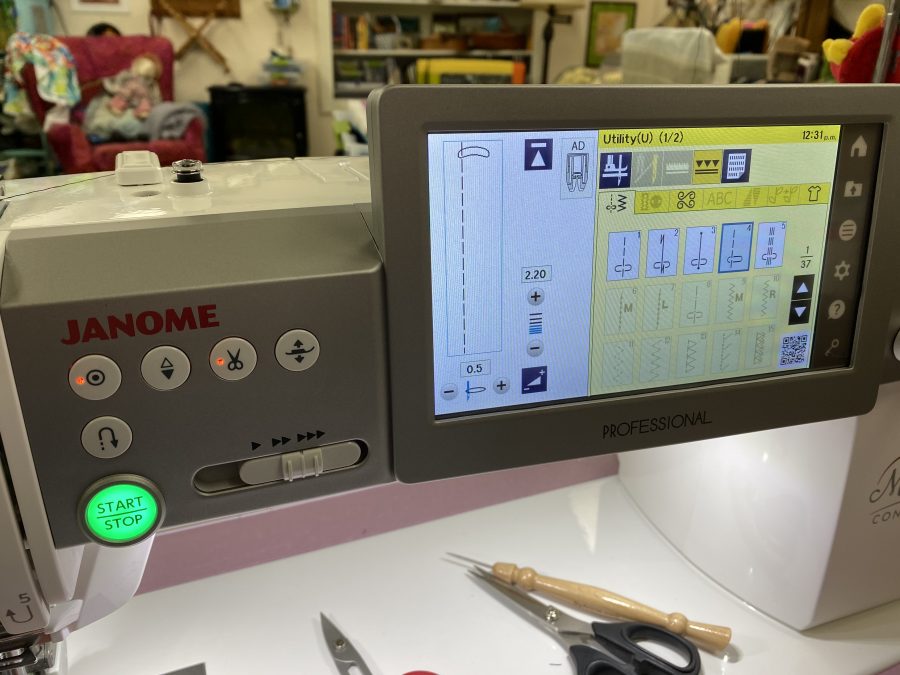
The Janome M7 Continental lets me piece SO accurately. Between the M7 and AccuQuilt, even *I* can be precise!
I paired up the two-triangle units to make sure I didn’t mix them up while sewing.
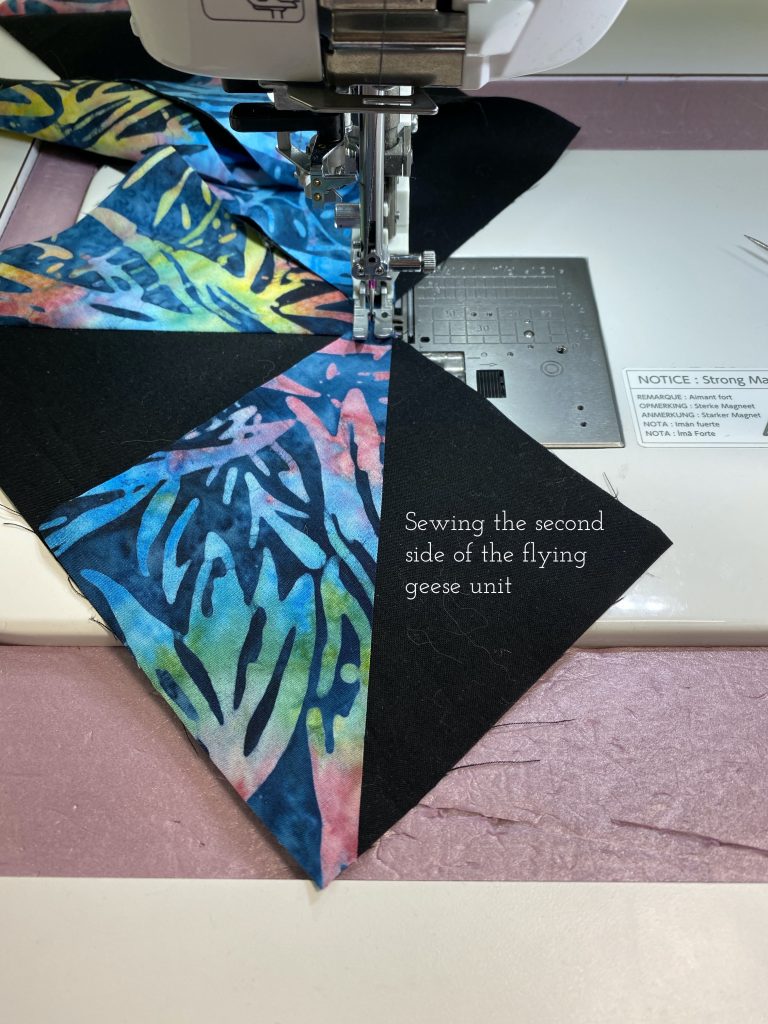
Then, sewing the pairs together. Using the M7’s HP foot and throat plate meant PERFECT piecing. See next pic!
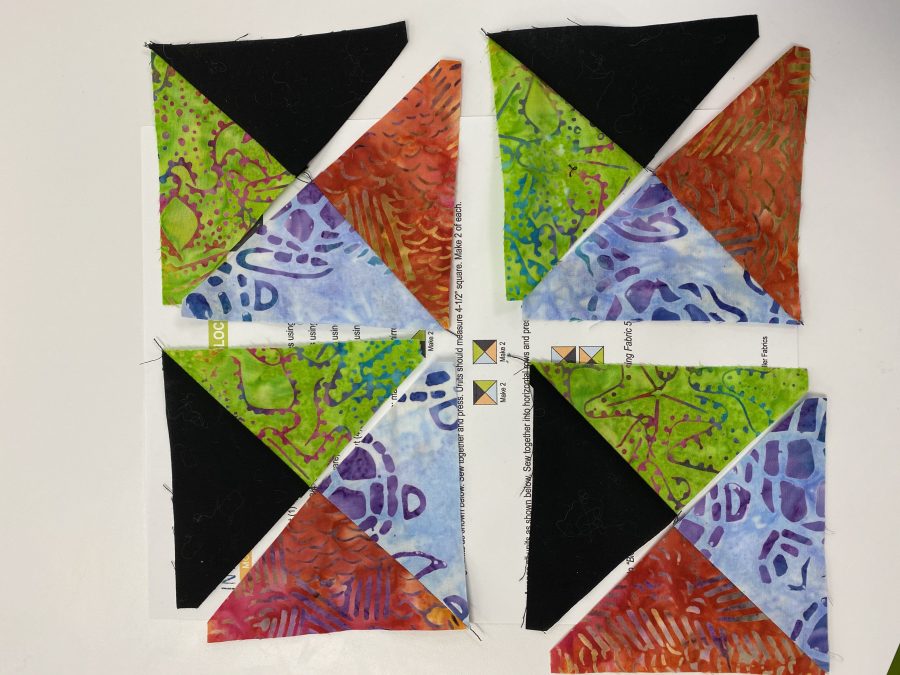
And two of the quarter-squares sewn together. I can’t believe I pieced that perfectly!
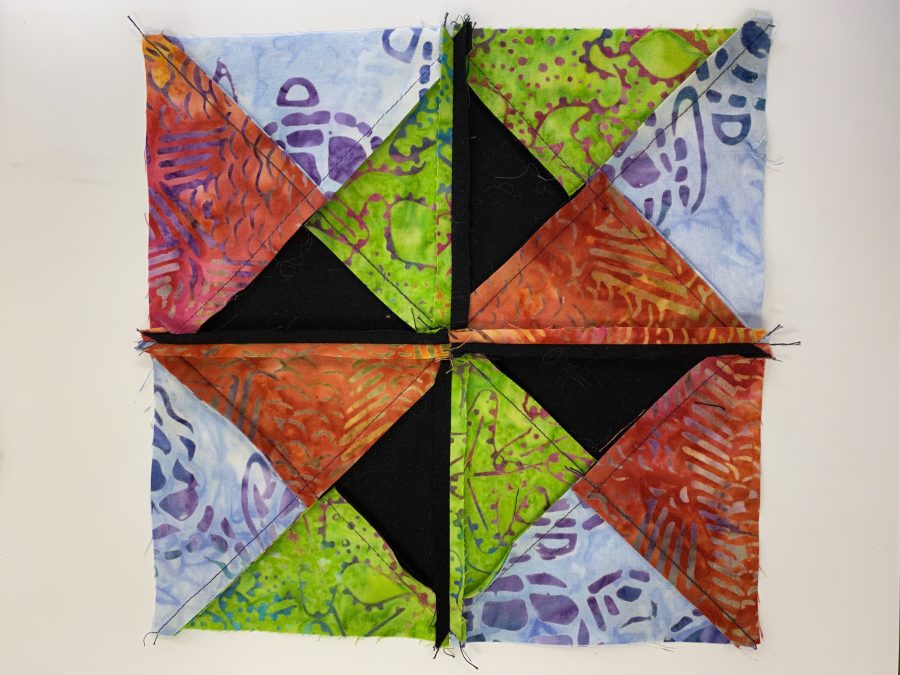
Here’s the back of the block. Notice that some seams are pressed to one side, but the main seams joining the four squares are pressed open. This helped keep everything nice and tidy and perfect on the front.
Once the center unit was ready, I set up the “frame” for the block.
I sewed the sections together in three rows. Notice the only imperfection is down where *I* used rotary cutting…sigh……..
Here’s the finished block again!

Remember, go here or HERE for all the links to the six blocks so far and to check in for the rest of the year. The finished quilt is beautiful!

Making an overhead camera stand for online teaching

Monday, June 22nd, 2020

As I transition to holding online classes to supplement live and in person classes, I needed an overhead view of my work table. The traditional way to do this (outside of a fancy filming studio) is with a “C-stand” that is sturdy/heavy, stands on the floor next to your work table and has a boom arm that extends over the table. Then you hang the camera/iPad/iPhone from the boom arm. Cue COVID delays in shipping. I tried the one I could get in time for this week’s Perfect Bindings class at the first ever Mancuso online shows. The accessories didn’t fit the boom arm. Back they went!

Cue: Mama’s brainstorming, Mama and son’s (Joshua) creativity, and Joshua’s awesome tools (Band saw! drill! Random bits and bobs) and construction experience and help, and a stand using leftover stuff and $5 in supplies.

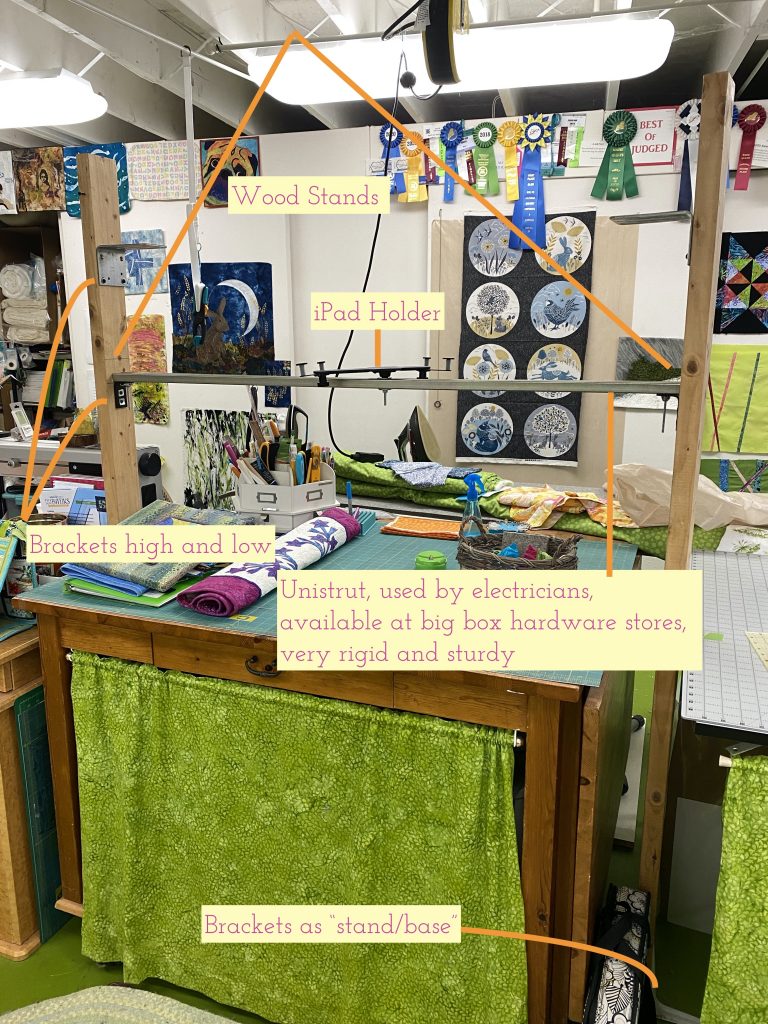
A DIY overhead camera stand

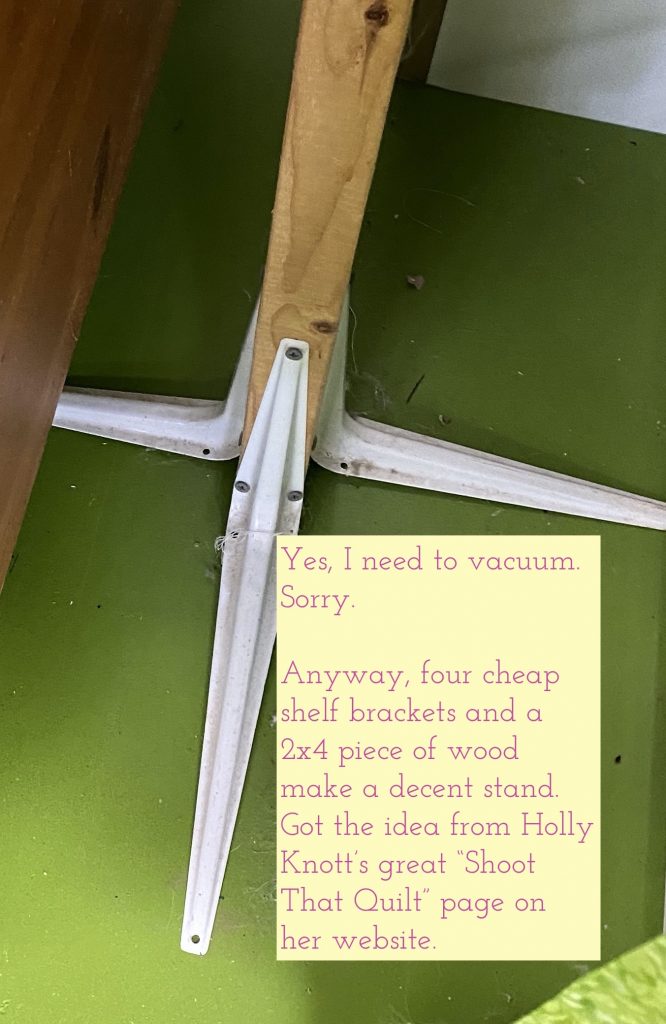
The wooden “light stands” were built based on information from Holly Knott’s wonderful “Shoot That Quilt” section on her website about taking great photos yourself of your quilts to enter in shows and magazines: two pieces of 2×4 lumber and four cheap shelf brackets for each stand.

Ignore the dust, cat hair, pug hair and thread. Please. Sorry. Here’s the link to Holly’s useful webpage on quilt photography.

Joshua, our older son, did some electrical work for Mom and Dad (us) a while back, and introduced us to something called Unistrut. Link here. It is a bit heavy, which is why I looked at C-stands to begin with, but that is also its virtue: it is totally rigid. Rigid helps keep your camera (in my case my iPad) stable.

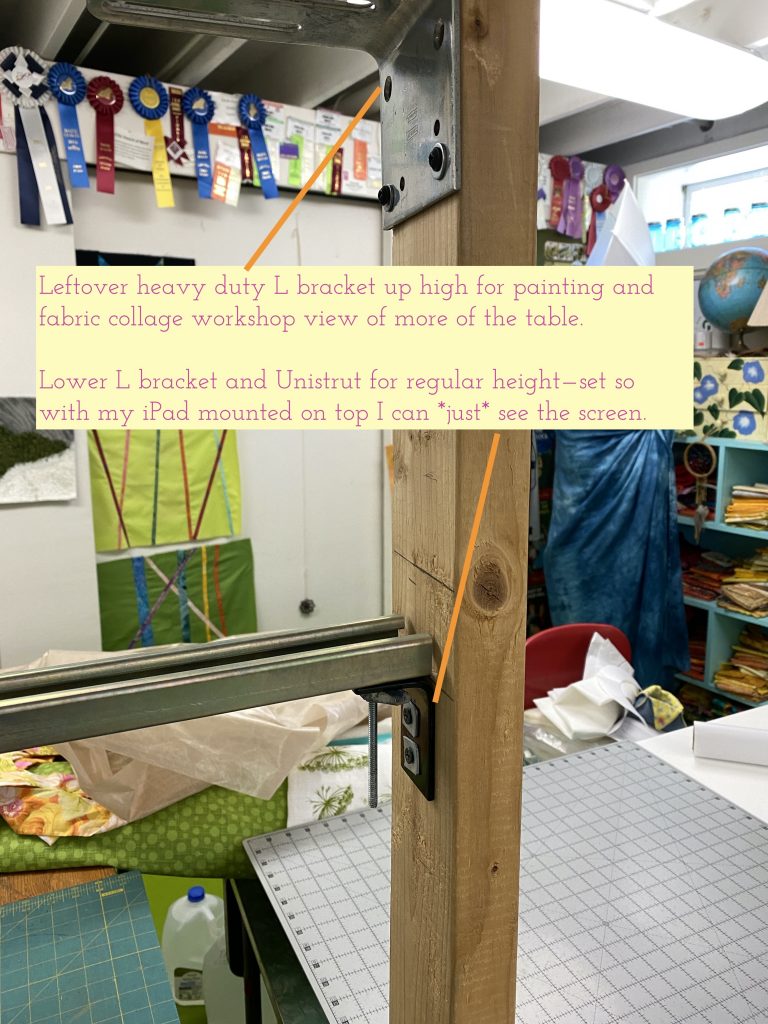
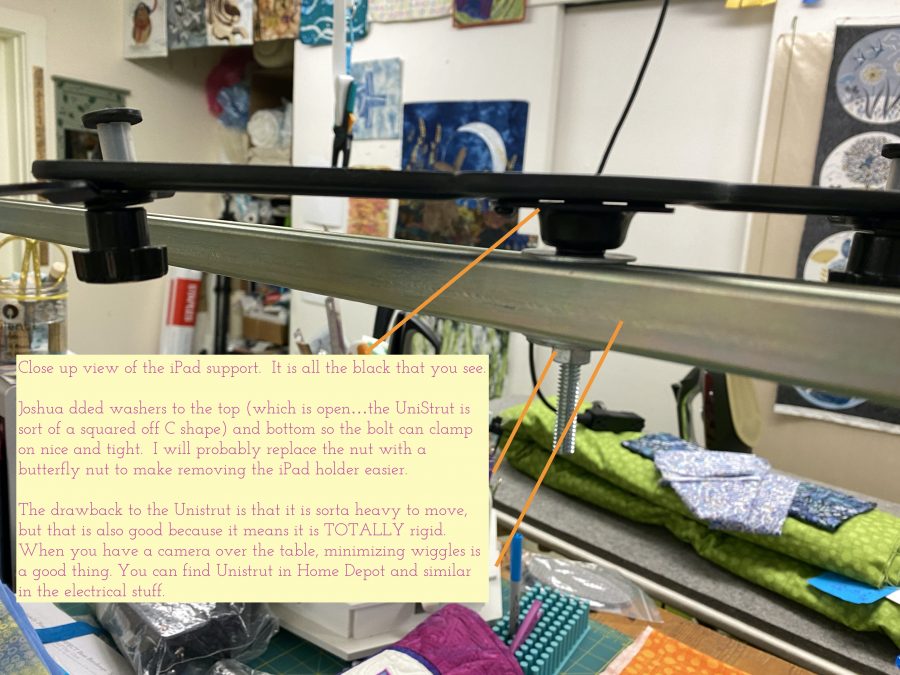
The upper brackets were from something else that was modified. Knew they’d be handy! I bought two small black brackets with one hole on each side. Joshua said I needed two holes to prevent the small L brackets from wobbling, so using his awesome power tools (tool envy!), he just drilled an extra hole. He cut the Unistrut in about 8 seconds with his band saw. It would have taken me the better part of an hour with a manual hacksaw! The length is the width of my table plus an extra inch or so to help maneuver the stand into place.
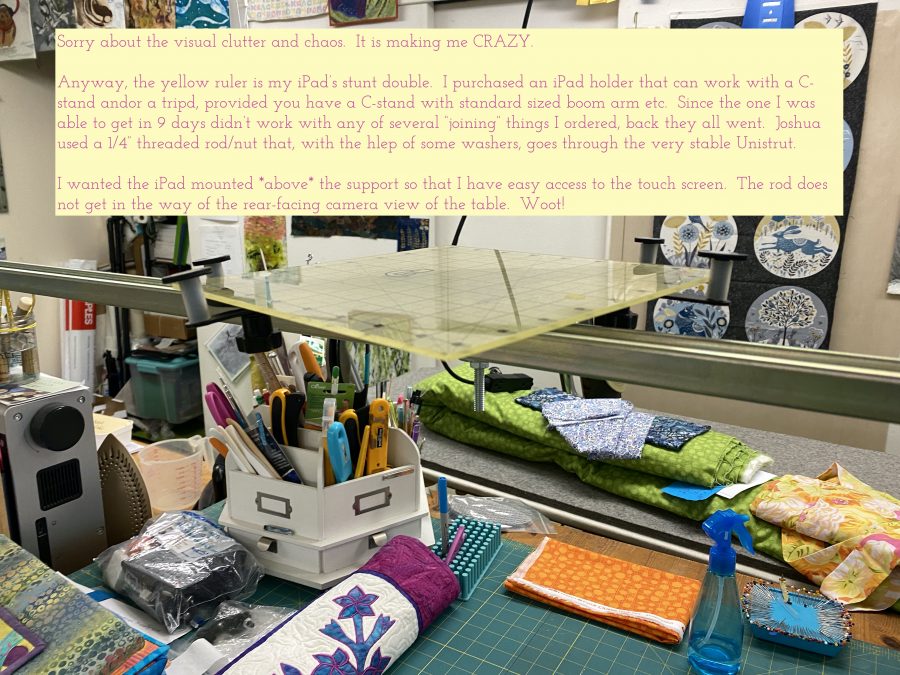
The ruler is serving as my iPad’s stunt double because I was too lazy to run upstairs and get the iPad while taking photos. Can you tell from the clutter how chaotic it has been?
I CAN’T WAIT to have a MASSIVE TIDY ATTACK!
I wanted the iPad above the bar for added stability and so I could have full access to the screen while teaching live online workshops.
A close up view of the stand attaching to the unistrut. Here’s a link to the iPad holder on Amazon. It isn’t the most rigid thing and the little grip thingies that hold the iPad in place aren’t huge, so that’s another reason to have the iPad on top supported by the cross bar and not just those four little pads.

SO if you are wondering what your teachers does to get ready for you, this is just one small but vital component. If you are going to TEACH online, I hope this helps you–please feel free to ask questions! MASSIVELY HUGE thanks to Lyric Kinard for her help on so many things on the technical side over the years, and to Lee Chappell who gave us newbie online teachers for the Mancuso show a studio tour by Zoom to share with us how she set things up. And THANK YOU to my wonderful, creative son who comes home and always wants to do some sort of “fix up” something for his mom and dad. Joshua, you ROCK!

Easy Peasy meets Soft ‘n Stable

Thursday, June 11th, 2020

In my last post I shared the Clam Up bag from byAnnie.com, and earlier I shared my AWESOME Running With Scissors bag made for her patterns. I love bags and baskets and boxes and things to organize. One of my favorite classes to teach is my Easy-Peasy Inside-Out Bag, which makes a great 3 hours quickie class for a bag (or two if you are fast) or full day class where you can learn more details and extras. I decided to try Annie’s Soft ‘n Stable stabilizer instead of batting to see how it would work in MY bags, which are quick quick quick and FUN! (Like potato chips, you can’t make just one!)

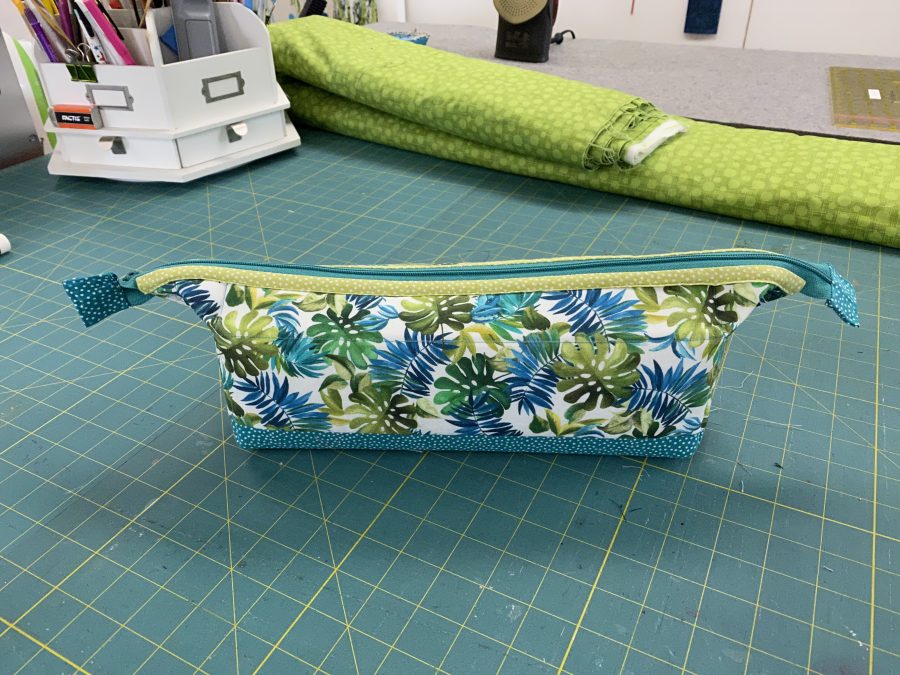
Here it is: the Easy Peasy process using Soft ‘n Stable and accenting the zipper with “binding” the way Annie Unrein teaches in her patterns at byAnnie.com The fabric used is courtesy of Michael Miller Fabrics–the main fabric is from the Lost in Paradise collection (shipped May 2020) and the other fabrics are the Garden Pindot collection on the outside and the inside (and that’s Hash Dots on the backing of the quilt you see awaiting quilting on the back of the table).
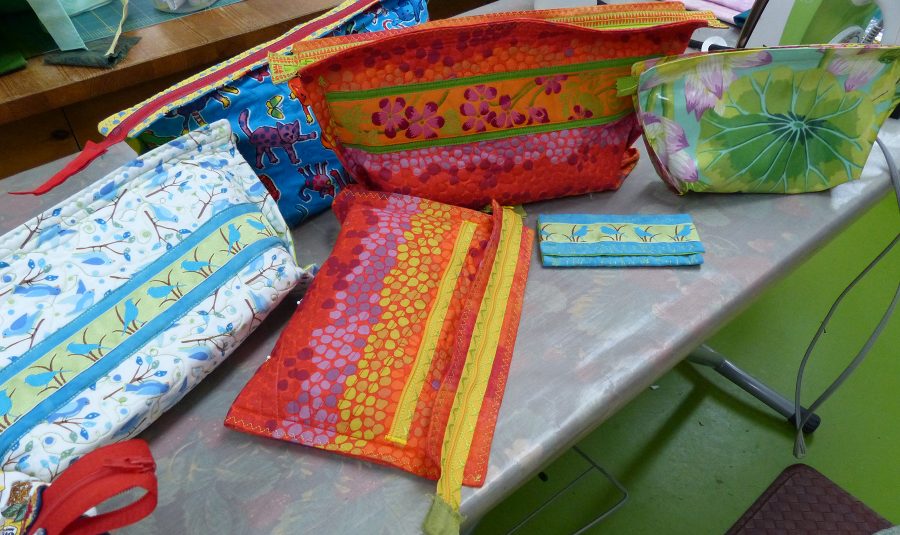
This is a sampling of the fun bags I teach in the Easy-Peasy Inside-Out Class…. if you think you’d like me to teach this for your guild–including LIVE ONLINE workshops, leave me a comment! They are fast and fun and can be customized so many ways.
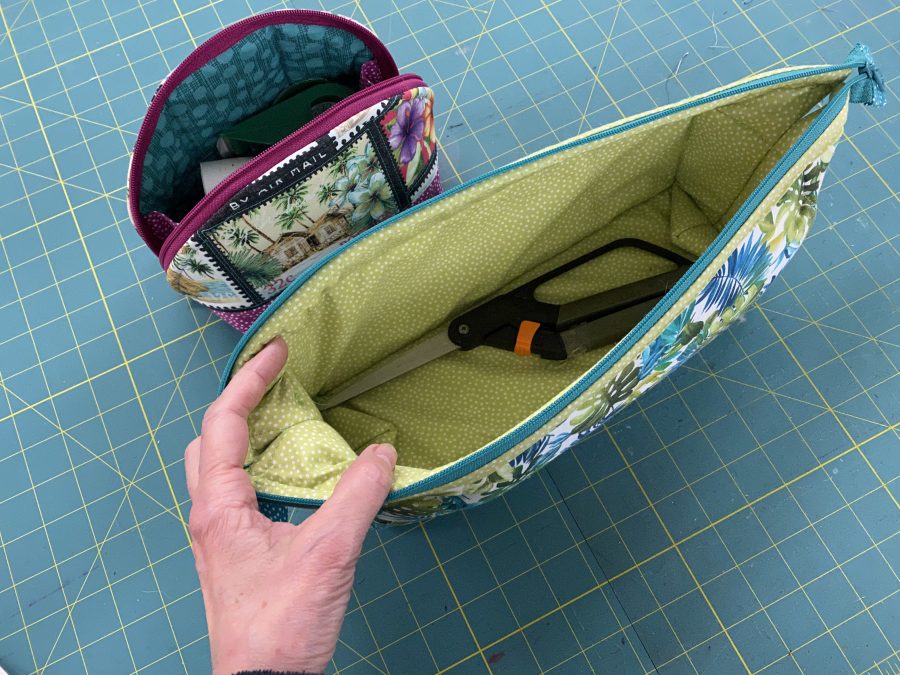
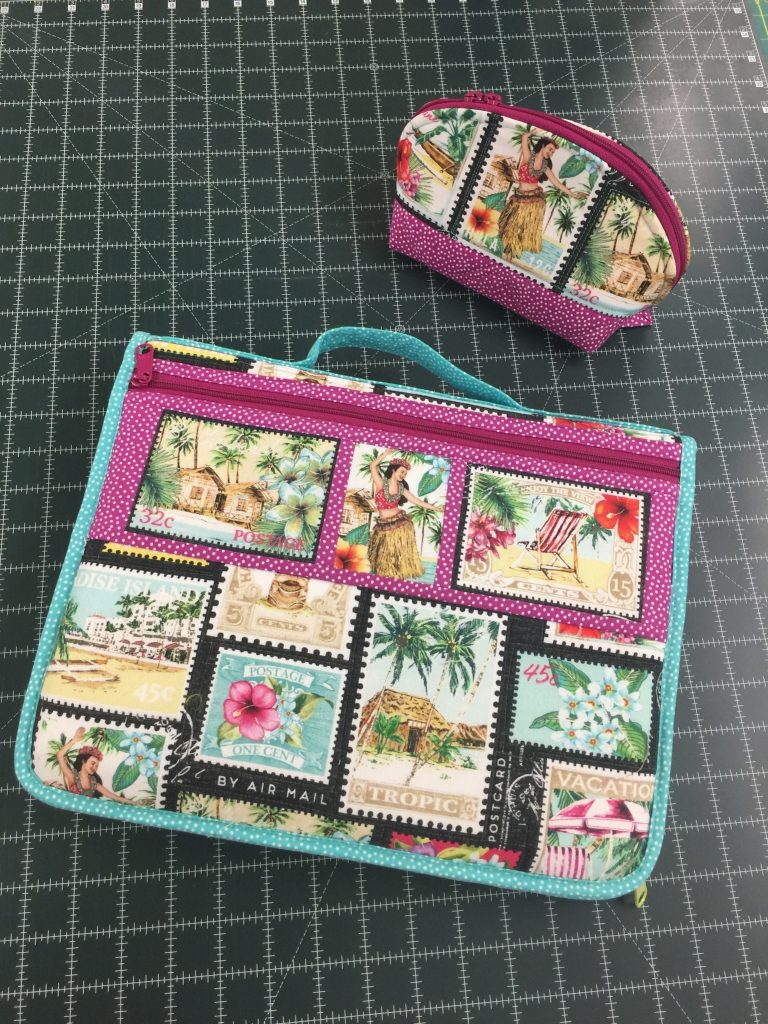
This shows the Clam Up bag and my Easy-Peasy next to it. I made this bag long enough to hold my large Fiskars flat on the bottom. Frankly, it is large enough it could hold a small knitting project or paper piecing supplies! One thing I will do differently next time is FUSE the lining to the back side of the Soft ‘n Stable. I didn’t use the walking foot and it shows. Oh well…lesson learned!
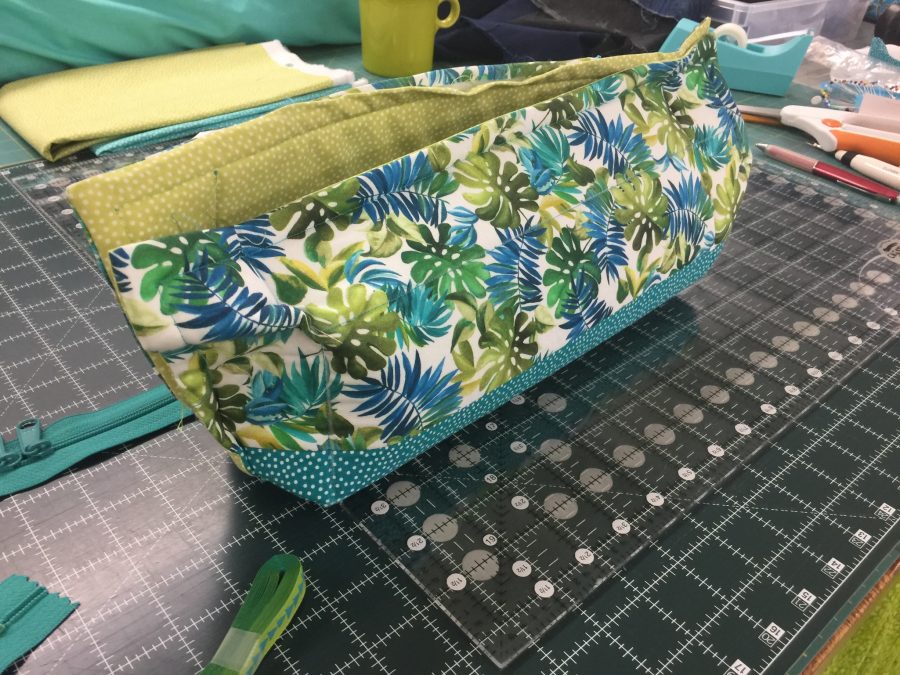
Before installing the zipper and sewing the seams, I pinned it together to check size and how I wanted to finish it. Most of my Easy Peasy bags leave the boxed corner triangles on the outside (see that photo above with the many colorful bags made with batting). Leaving the triangles outside acts to stabilize the bag and keep it upright. With the Soft ‘n Stable doing that job, I chose to tuck the “corners” inside for this bag.
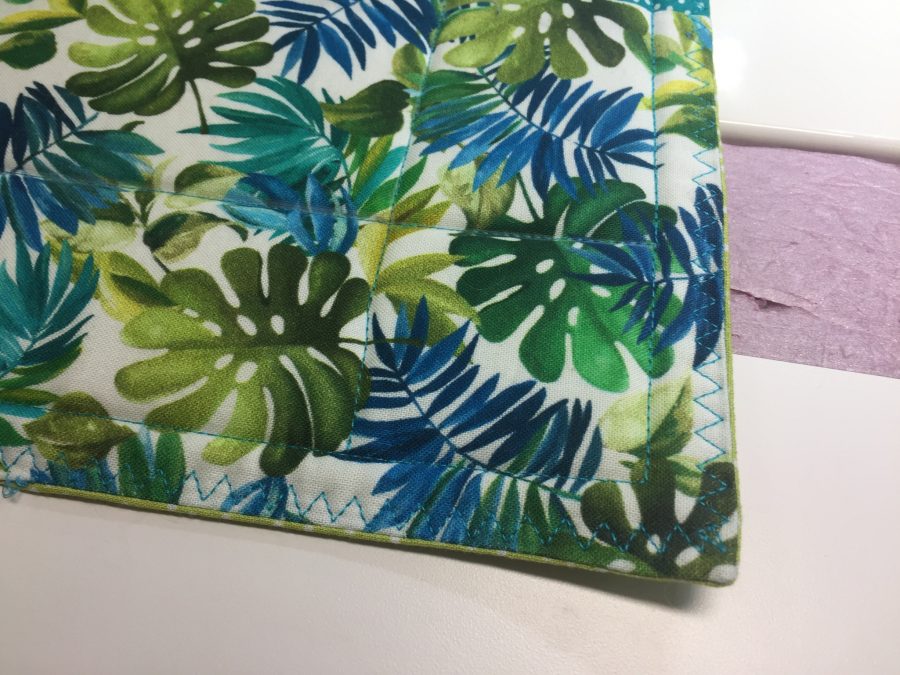
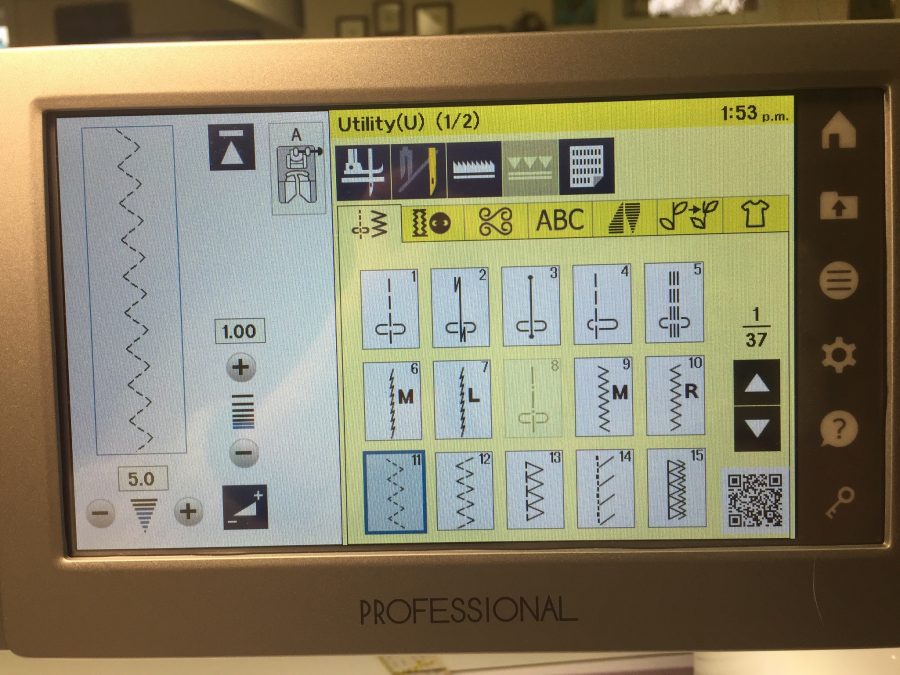
Next, before boxing the bag into shape, I used the 3-stitch zigzag to secure and tidy up the edges.
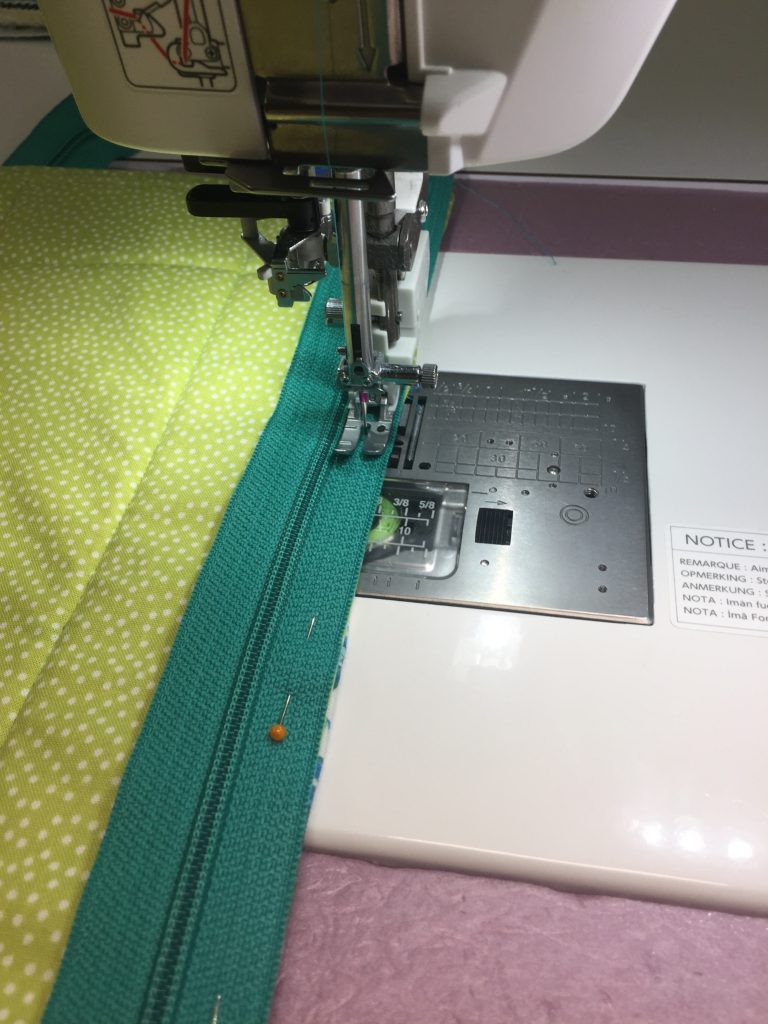
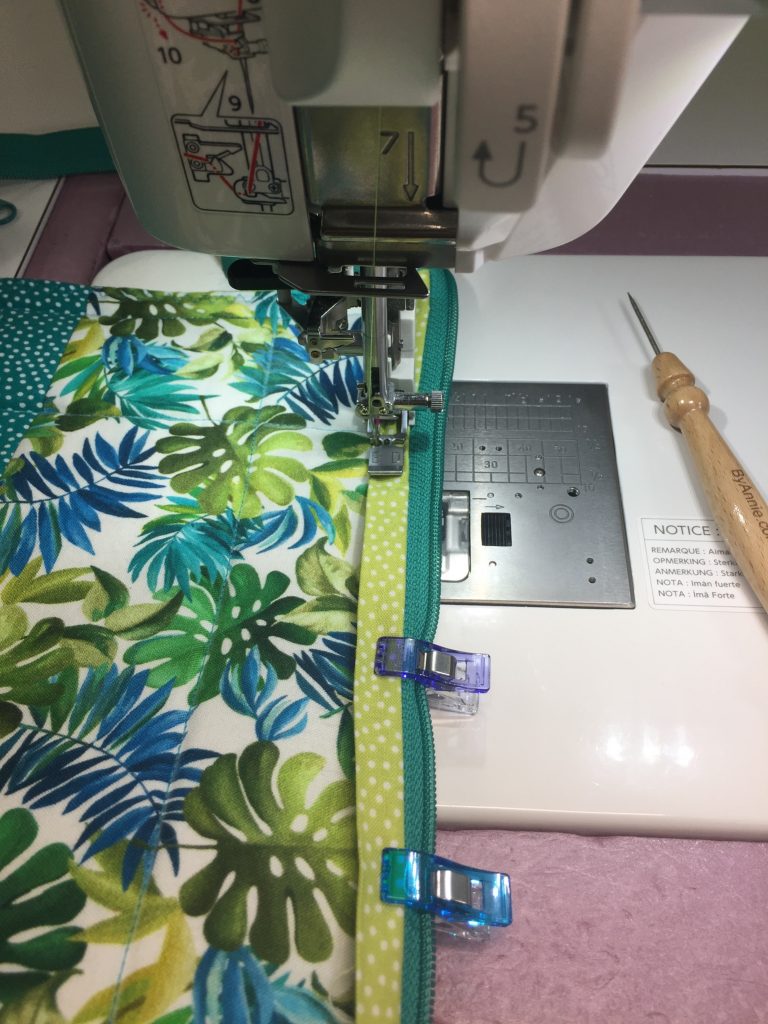
The narrow accufeed foot on my Janome M7 makes it a breeze to sew zippers to a quilted, puffy base without distortion.
Here I’m adding a decorative element to the zippers. Gotta love wonder clips!
On my Janome M7, I the three-stitch zigzag looks like this, but it is available on all but the most basic machines as a standard utility stitch. The M7 allows me great flexibility in both stitch width and length–not all machines do!

My Easy-Peasy Inside-Out process is fun, fast, and infinitely adaptable. I’ll be making a new version of my notebook cover–I’ve also got an iPad case, a business card case, and a few other goodies up my sleeve. Maybe I’ll self-publish a book of patterns and variations on the theme…what do you think?

Next up, I’ll share a basket pattern that again modifies what I’ve learned from the byAnnie.com patterns! Stay tuned!

Found in Paradise: a clam!

Monday, June 8th, 2020

OK, that’s a bit punny…. I’ve used some of the fun Michael Miller Fabrics Lost in Paradise fabric to make a byAnnie.com pattern called Clam Up. Before COVID hit, I was thinking about my travel teaching, and I made the Running With Scissors tote and blogged about it, here. I wanted a companion bag for bulky stuff I needs to schlep with me. Both of these bags are good for use in your sewing space, retreats or a whole bunch of other things!

The Clam Up bag pattern allows you to select various sizes. I chose a Large to use for travel teaching. I used the Lost in Paradise print as well as the Garden Pindots (the magenta) and Hash Dot in an aqua color way. A quick google showed lots of the Lost in Paradise prints available on Etsy–the collection came out in May 2020.

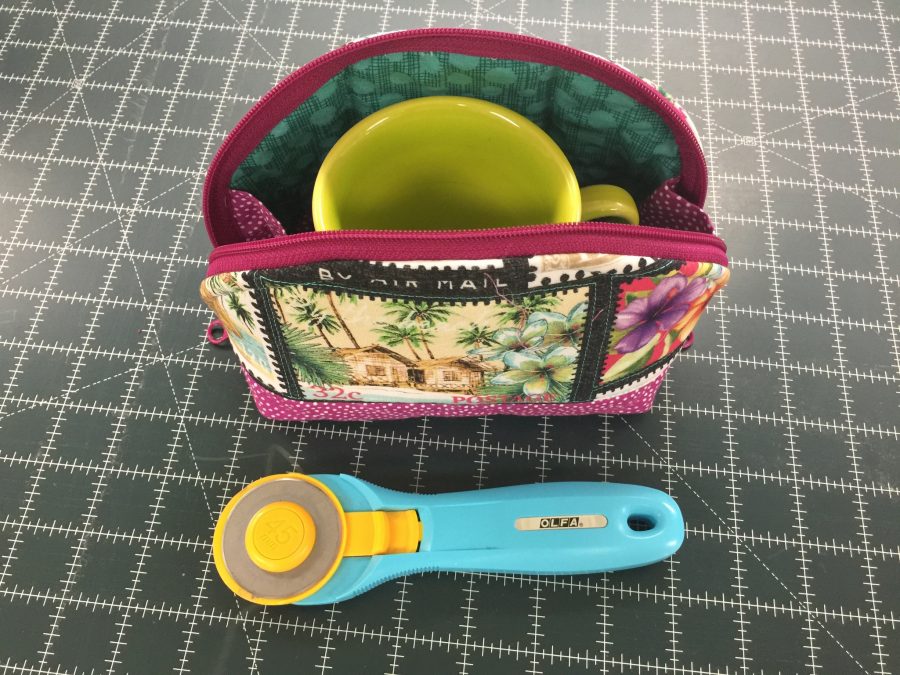
I really like bags that open up wide, where I don’t have to root around–I can just open ‘er up and SEE what I need to grab. The large was big enough to set my mug inside…at least unzipped.

The Large bag is large enough to fit a 45mm rotary cutter on the bottom (flat) and in this photo shows my MUG inside! The gussets on the side allow the bag to open up (like a clam, get it?!) wide so you can see what is in the bag, but prevents stuff from falling out.

Annie Unrein and her staff suggest quilting up your fabrics, using her Soft n Stable instead of batting. The Soft n Stable is a foam with a soft, grippy fabric on the outsides. I love that it stands up and holds it shape, the cotton doesn’t slip ‘n slide around, and doesn’t require a ton of quilting to look good in the finished project.

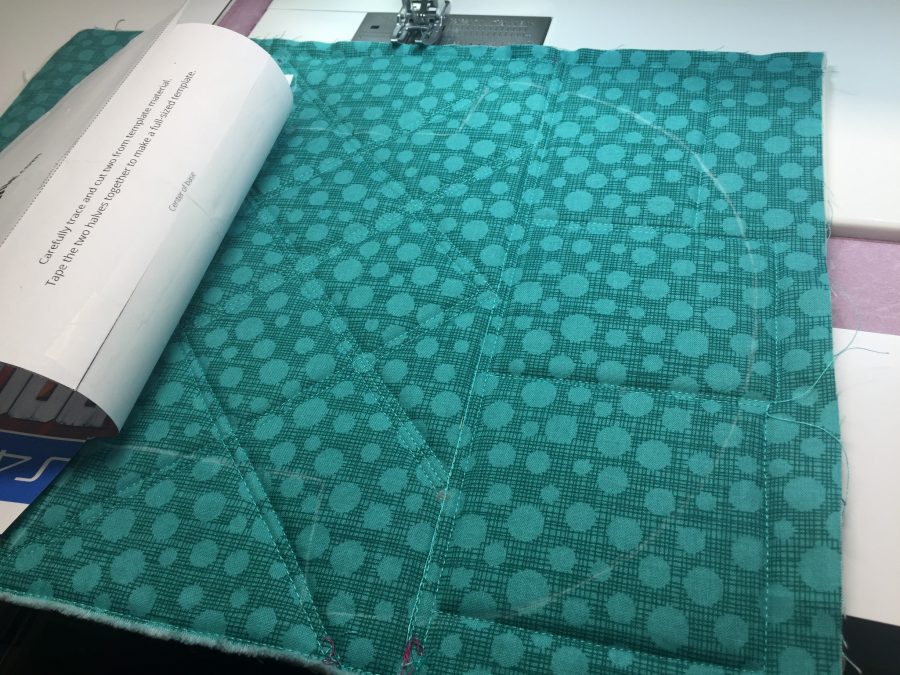
Here I have quilted the sandwich of inside and outside fabrics. I chose to piece the outside so it would have the magenta on the bottom, feature the print, and use a coordinating magenta/fuchsia bag zipper (wider zipper tape) from byAnnie. You can see I’ve used the walking foot for simple outlining for the feature fabric and a simple grid on the base.
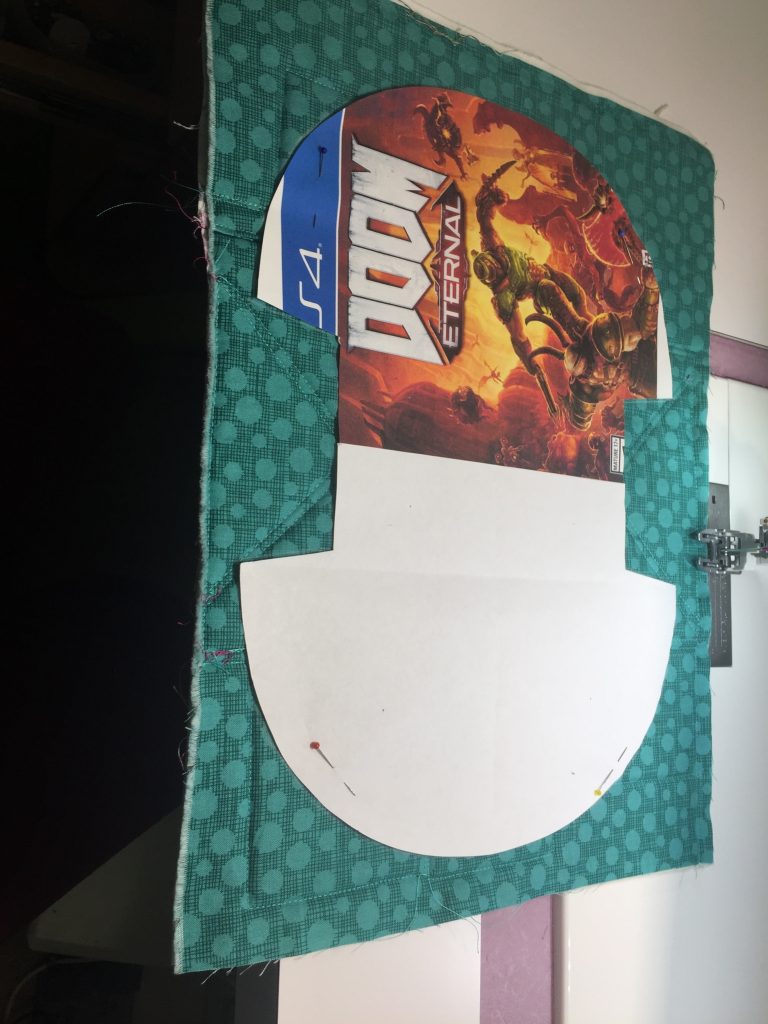
Here, I’ve used paper from the recycling bin to create a full-size pattern. Son had asked me to print the video game he was giving his brother as a gift…definitely not my game LOL! Now it is time to cut out the bag.
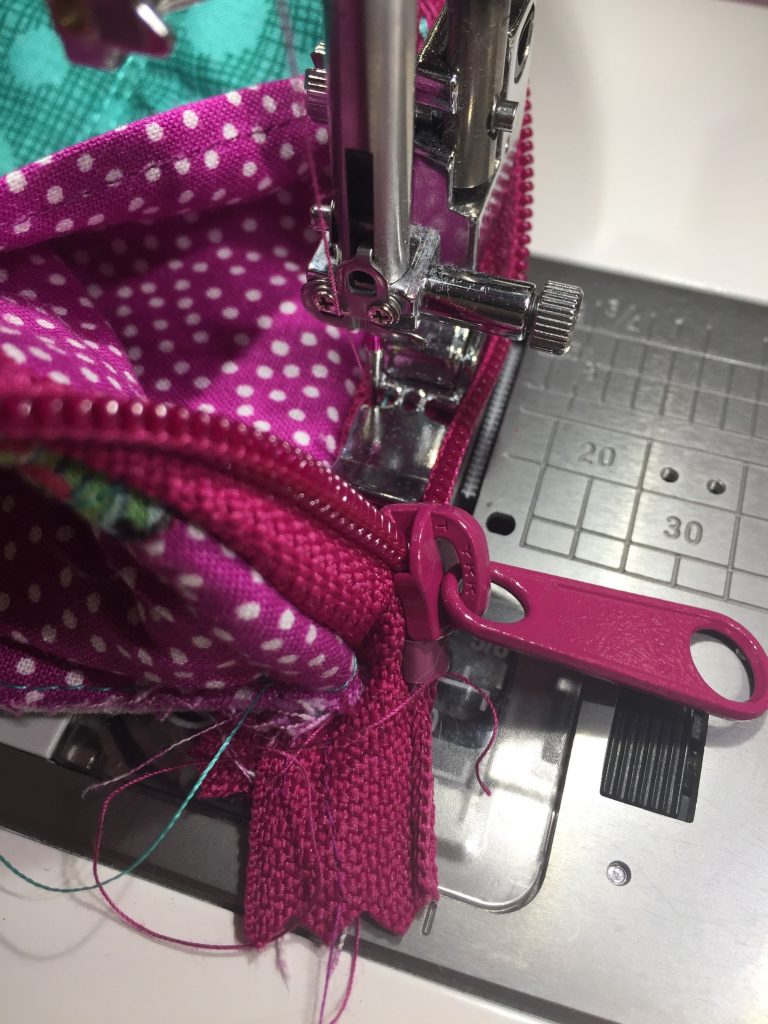
Annie has some great tips about sewing zippers, and has started doing “add-on” videos to help teach you how to make her bags to perfection. I’ve been sewing 50 years and am pretty adept, and I’m picking up great tips. I am also developing a great fondness for the Garden Pindot (the magenta) and the Hash Dot fabrics…they are really great blenders. Have been adding to my stash!
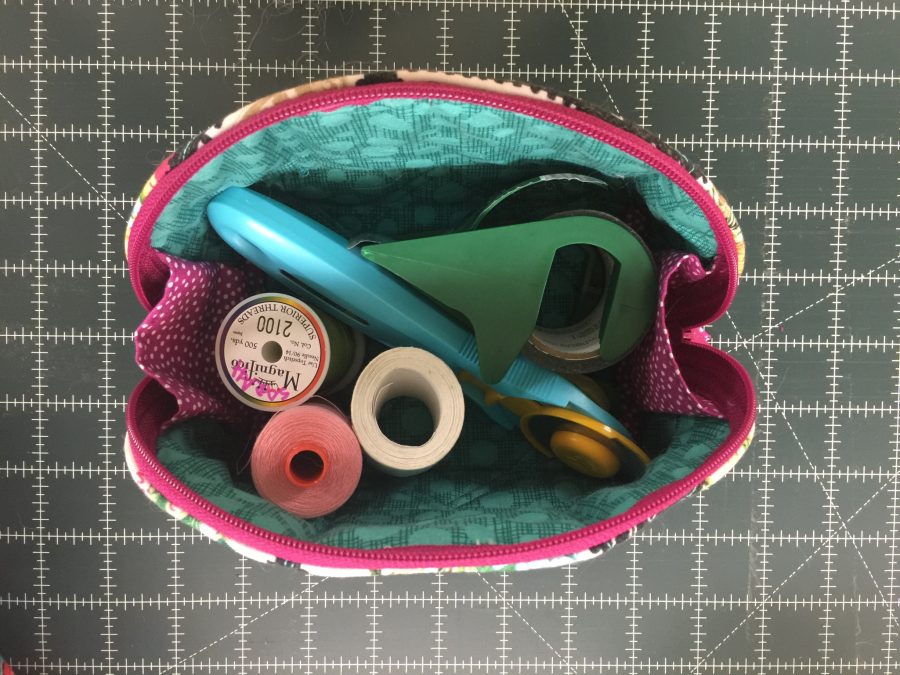
LOOK at all that can fit inside here: rotary cutter, roll of package tape (for when I need to ship a box home from a venue), and large spools of thread. I often let students borrow tools to try them out (sometimes I sell them, too, but always tell them to try mine out to see if they like the tool before purchasing it). Now I can set this bag out as a “ok for students to use stuff” and keep my things that I need at the teacher table to use in the Running with Scissors bag.
Originally this was designed as a travel-teacher duo. Don’t know when I will be able to travel teach again, but these are great in the studio and for guild sewing days and retreats, too. And a whole lot of other things. Here’s the link to the blogpost again for the Running With Scissors bag. I have quite honestly kept that bag out as what now appears to be a permanent addition to my cutting workspace!
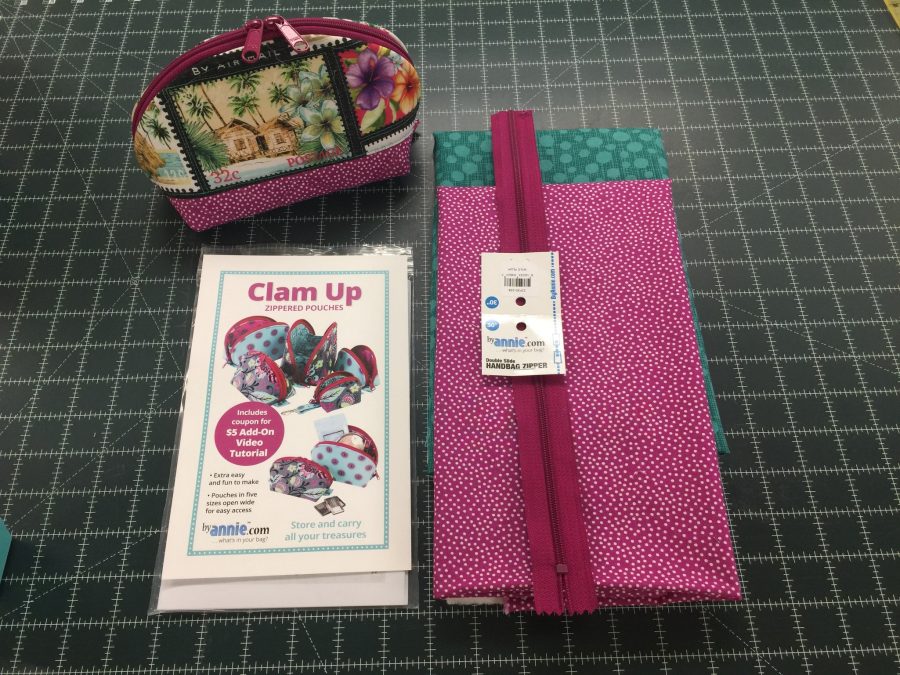
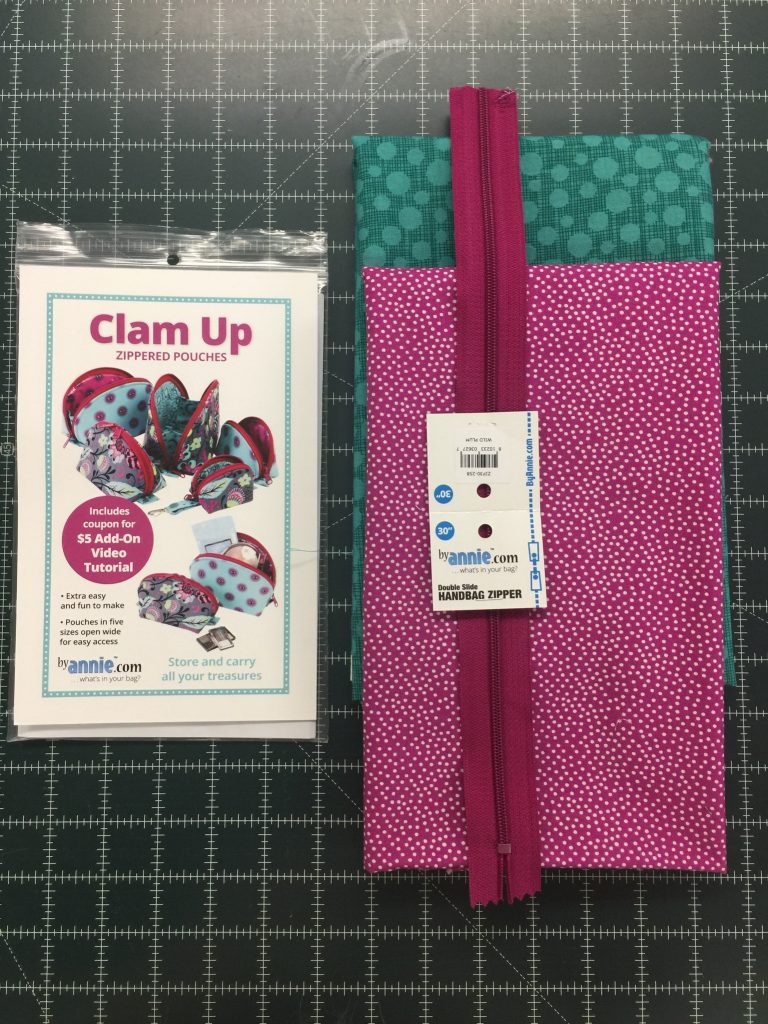
And here’s a closer look at the pattern, the blender fabrics (always available from Michael Miller), and the zipper from byAnnie.com . I LOVE being able to get coordinated components from byAnnie–the mesh, elastic, zippers, all the colors match or coordinate for tons of fun! I must have about a dozen (or more) of her zippers and a stash of bag-making components now!

Next up: inspired by Annie’s construction techniques and materials, I made one of my Easy-Peasy-Inside-Out bags merging my process and her materials. Check back soon!

Note: for this post, the fabric, pattern and zipper are courtesy of Michael Miller Fabrics and byAnnie.com–THANK YOU! But I love the stuff so much I have spent a goodly chunk of my own hard-earned money buying more of the fabrics and notions.